


 newsitems Next G8 Chair France Stimulus Minister Devedjian to EuroFora:2009-2010 Result+2011 Hope=Save+Invest!
Next G8 Chair France Stimulus Minister Devedjian to EuroFora:2009-2010 Result+2011 Hope=Save+Invest!


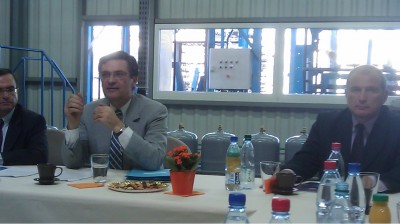
Speaking shortly after the G8 Global Governance Summit at Huntsville (Canada) followed by the G20 at Toronto debate on how to Reduce Expenses but augment Growth, the 2011 G8 and G20+ Chairman, French President Sarkozy's close collaborator and Stimulus Minister, Patrick Devedjian, replied to "EuroFora"'s Questions by stressing that 2009-2010's results open hopes for 2011, if rigorous savings on current expenses are associated with vigorous investments.
- "EuroFora" questioned Devedjian on the "Timing" of the various Economic Stimulus actions, and "how they'll evolve", "in relation to the current Debate, on European and Global level (G 8), on required Economies, but also about Growth".
- "In fact, you are questioning, implicitly, how the debate on overcoming the difficulties to Control Public Spending, could be Compatible with the (Economic) Stimulus", observed the key French Minister.
- "I think that Public Spending should, naturally, be considered Globally, but it should also be considered more Precisely (analytically) : There are two, absolutely Differend Kinds of Public Spending : On Investments, ...and on Current (Operational) expenses (on Functioning), i.e. about the everyday way of life".
- "Our Moto should be : <<Rigour in Functioning, Vigour for Investment !>>, Devedjian stressed.
- "I.e., the Investment (Public) Spending generates Growth. And this is needed, because otherwise, there will be No Growth, since the Private Investment has, globally, stalled. So that, provisionally, it's the Public Spending which takes over".
- "Afterwards, there is also the Spending for the Functioning, which is often too Heavy and Sterile, even if it's Necessary from certain points of view. But, when some Luxurius Habits have been taken, this results, sometimes, in an excessively High Cost for our (French Public) Administration", he observed.
- "F.ex., last week, I went to Higher Normandy (Region). The Prefect of Maritime Seine and High Normandy, was talented enough to apply what we call the "RGPP", i.e. the General Review of Public Policies, on his own Prefectoral Administration, which had been, since a remote Past, dispersed in 17 different locations.
(But), "since 2007, this Prefect, ...meticulously took care to rationalze his Administration". This was done "also according to the Directives given by the Government, which prove that, this Control of Public Spending is not something that we have just discovered, but was already included in the (French) Government's Program since 2007", he noted smiling.
- "And those seventeen (17) locations, at differend areas, were reduced and regrouped into just four (4) locations. Obviously, from this point of view, the Public Spending on Functioning (current expenses) was reduced, the Administrations operated better by organizing a Synergy, (something which isn't done simply by striking fingers and putting everything in the same box, because this regrouping represents a lot of work).
- "This shows exactly what should be done by Controlling Public Expenditure : Eliminate the unnecessary expenses, which are often there. So that, "in this way, we can Spare Unecessary, Sterile Expenses, and, at the same time, Invest"
- "The example I gave at a "Micro" level, is part of a General Governemental Policy, symbolized by 2 aspects :"
- From one side, "the (Economic) Stimulus Plan, and the Great Loan ("Grand Emprunt"), for Investments, in order to win a part of Growth". "And", on the other side, "the Policy of Controlling Public Expenditure, in order to reduce Current expenses on functioning", as "this had already been planned since 2007", he concluded.
Meanwhile, the first Results of the Economic Stimulus Plan in France indicate its "Efficiency" with a probable Growth of more than + 4% GDP between 2009 - 2010 :
- "The French Recession back in 2009 was the Smallest in Europe : Less than - 2,5%. In comparison, Germany (the Richest EU country), had a 2009 Recession of - 4,9%, i.e. almost the Double", the Minister reminded.
- "And our Forecasts for 2010 Growth are + 1,5 %. "This is, certainly, not enough yet, in order to create many new Jobs, but, compared to the Past : i.e. - 2,5% in 2009, up to +1,5% in 2010, it represents an amelioration of + 4 %", he observed.
- Therefore, "we also have many Hopes for 2011", Devedjian added, speaking earlier to a group of Journalists including "EuroFora", near Strasbourg
Indeed, the "Stimulus Plan had 2 main Aims : At first, to face the Global Crisis, in order to create a Positive "Counter Effect" against the Recession. .. The 2nd aim is that the Money is not only used to simply react, but also in view of the greatest possible Economic Efficiency, .. in order not only to fil an endless gap, but also generate Growth", he explained.
------------------------------------
About 4,5 Billions € remain available to be invested in the following 6 Months, until the end of 2010, by the French Stimulus Plan :
- Out of about 39 Billions € in all made available for 2009-2010, some 34,5 Billions € have been already injected in the Economy. "The Budget which had been voted was for 2 Years : I.e. it ends on December, 31" of 2010, observed Devedjian, who had visited Strasbourg right away when he started, (i.e. on December 29, 2008 : See relevant Statements given then in reply to "EuroFora"s questions).
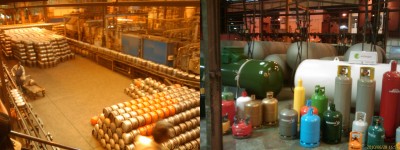
"Liquefied Gas International" (GLI in the French version), is a Leader in France, Europe and neighbouring Countries, from the U.K., Germany, Italy, Spain, Croatia and Serbia, up to Moroco, Algeria, Libya, Egypt, Syria and Saudi Arabia, etc, on Liquefied Petrol Gas (LPG) recipients, (with competitors only from Portugal and Turkey)..
GLI's President, Francois Hamy, speaking later to "EuroFora", observed that forthcoming Developments to boost Liquefied Gas Transport, including by Sea, River, etc, "will End up in our Bottles", thereby augmenting this Industry's production of Liquefied Gas' Bottles, Containers, etc. Current Production Speed is "one (Gas) Bottle in 4,5 Seconds, i.e. 800 Bottles in 1 Hour".
Moreover, by specializing in Gas produced from Oil (Liquefied Petrol Gas : LPG), GLI International reportedly has also some "Big Industrial Projects", partly "linked to Renewable Energy" Innovative Projects, which may augment its turn over for several Tens of Millions € more. LPG can, indeed, be used also mixed with Solar and other renewables.
The move topically coincides with experienced Professor Jacques Amouroux's recent statements to "EuroFora" on the huge potential of CO2-produced Methanol and other Gas Energy for Industry, Cars and Power, often transported in Containers, Bottles, etc., which could give a boost to Europe's "Energy Independence".
In addition, LPG Gas can also boost a new, cheap and more environment-friendly Energy for Cars, according to a specialized Association, which could become of large importance, since it seems too expensive to really transform all EU's cars in Electric ones during the foreseeable future, as Professor Amouroux has calculated.
(See recent DraftNews already sent to Donors/Subscribers, which will be completed with an extenso full Interview and much more concrete details on that interesting issue, which is due to be examined at a forthcoming EU Conference in Poland).
Such "excellent perspectives" serve also to better highlight, by illustrating with concrete examples and making even more clear Devedjian's focus on spending only in Productive Investment able to generate more Growth.
Main Menu
Home Press Deontology/Ethics 2009 Innovation Year EU endorses EuroFora's idea Multi-Lingual FORUM Subscribers/Donors FAQs Advanced search EuroFora supports Seabird newsitems In Brief European Headquarters' MAPs CoE Journalists Protection Platform
BRIEF NEWS
- 00:00 - 02.06.2021
- 00:00 - 18.10.2020
- 00:00 - 19.06.2020
- 00:00 - 18.05.2020
- 00:00 - 20.04.2020
- 00:00 - 02.02.2020
- 00:00 - 09.12.2019
- 00:00 - 27.11.2019
- 00:00 - 16.11.2019
Popular
- Yes, we could have prevented Ferguson riots says World Democracy Forum's Young American NGO to ERFRA
- Spanish People Elect CenterRIGHT Majority with 1st Party and Total of 178 MPs (6 More than the Left)
- Pflimlin's vision
- The European Athletic "Dream Team", after Barcelona 2010 Sport Championship Results
- Source Conseil d'Europe à ERFRA: Debatre Liberté d'Opposants à Loi livrant Mariage+Enfants à Homos ?
- Head of BioEthics InterGroup, MEP Peter Liese : "Embryonic stem cell research reaching its END" !?
- Spain: Jailed Turkish Terror suspect with Explosive,Drones,Chechen accomplices stirs Merah+ Burgas ?
- UN Head Ban Ki Moon at CoE World Democracy Forum : - "Listen to the People !"
Latest News
- Test Photos (f.ex.+ Invit to EU + Korea Peace meeting)
- EUOmbudsmen Conference 2022: Digital Gaps affect People's Trust threaten EF Project on EU Future ?
- French Election : Black Out on Virus, but Obligation for Fake 'Vaccines" Challenged
- Both French Presidential Candidates point at "Humanism" in crucial times...
- France : Zemmour = Outsider may become Game Changer in Presidential + Parliamentary Elections 2022
Statistics
Visitors: 62858651Archive
Login Form
Syndicate


Other Menu
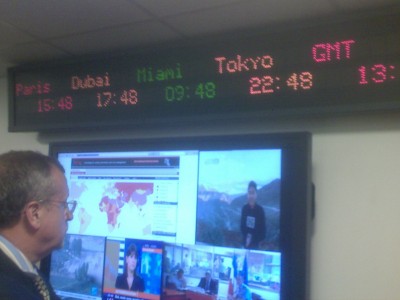
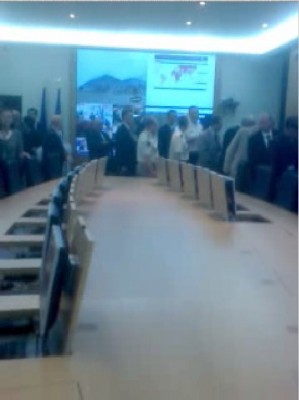
The High-Tech, brand new Crisis' management Center (CMC) inaugurated Wednesday by French Minister Bernard Kouchner, fits well EU's Humanitarian and Security-Defence aims, revealed a gathering of the largest Group of MEPs (EPP) organised in Paris these days, to prepare the debate on French EU Presidency's priorities (July - December 2008), that President Nicolas Sarkozy will present next week in EU Parliament in Strasbourg.
Due to face a large spectrum of Crises : from Humanitarian (f.ex. Natural Catastrophes, evacuation of Civilians or rapatriation of expats, populations exposed to Hunger and/or risky Sanitary conditions, etc), to various consequencies of Terrorist threats, Armed conflicts, or of Peace-keeping operations, etc, and joining Geopolitics with Diplomacy, CMC is able to deal with urgencies in real time anywhere in the world, by concentrating qualified Experts and impressive High-Tech equipment (i.e. Giant Computer Screens working in parallel, Visio-conferences, Satellite connections, etc).
Kouchner stressed that "Humanitarian and Political considerations can co-exist in real practice, if each one respects its independence", and, speaking to EuroFora, underlined his intention to have special representatives in "Strategic" locations, creating a "Network", open particularly to European cooperation.
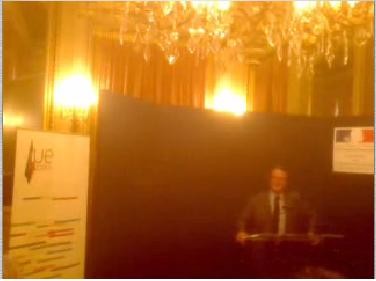
- "We must fill the gap in Europe's Civilian and Military capacities", declared earlier at Matignon, French Prime Minister Francois Fillon, while EU Commissioners met with their counterparts among French Ministers.
This point was at the focus of European People Party's "'Study Days" in Paris, from 2 to 4 July 2008, entitled : "For a Safer Europe", with a central Debate on EU's Security and Defence policies, where EU Parliament's President, German MEP Hans Gert Poettering, French Minister of Defence Herve Morin, and the Chairman of EU's Defence Committee, MEP Karl von Vogaw, spoke before meeting with Sarkozy, Wednesday afternoon.
- "We need specifically European systems, including, f.ex. Satellite networks, etc", stressed the experienced Chairman Karl von Vogaw, speaking after the meeting with President Sarkozy to European Journalists from EuroNews, EuroPolitique and EuroFora.
- And there where "European forces are already gathered, (f.ex. in Cyprus, Balkans, Lebanon, etc), if new operations started, I'd prefer to see them under European command in Future", he added, in reply to questions on how to overcome problems raised by a 3rd Countries as Turkey.
Vogaw presented earlier, at EPP's plenary, a comprehensive Report on EU's Security and Defence policy, with a strong High-Tech component (including Satellites, UAV, protected Telecoms, Strategic Air and Sea Transports, Space assets, etc), sharp references to Political will and Historic necessities, while also stressing that EU must overcome the divide between Civilian and Military research and activities, making "a close cooperation between Civilian and Military means" a "specific" mark of Europe.
The experienced Top MEP, after helping to build the "EuroZone", as a long-time Chairman of EU Parliament's Economic Committee, has recently started to chair a brand new "Security and Defence Committee", aiming to build European Defence, as the 2nd task of his life, as he told earlier to EuroFora.
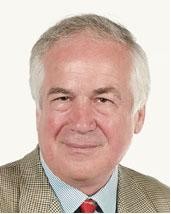
The Committee, chaired by Vogaw, will hear, next week in Strasbourg an Experts' view about on the French EU Chairmanship's priorities in ESDP on Wednesday, before President Sarkozy's plenary debate, exceptionally on Thursday.